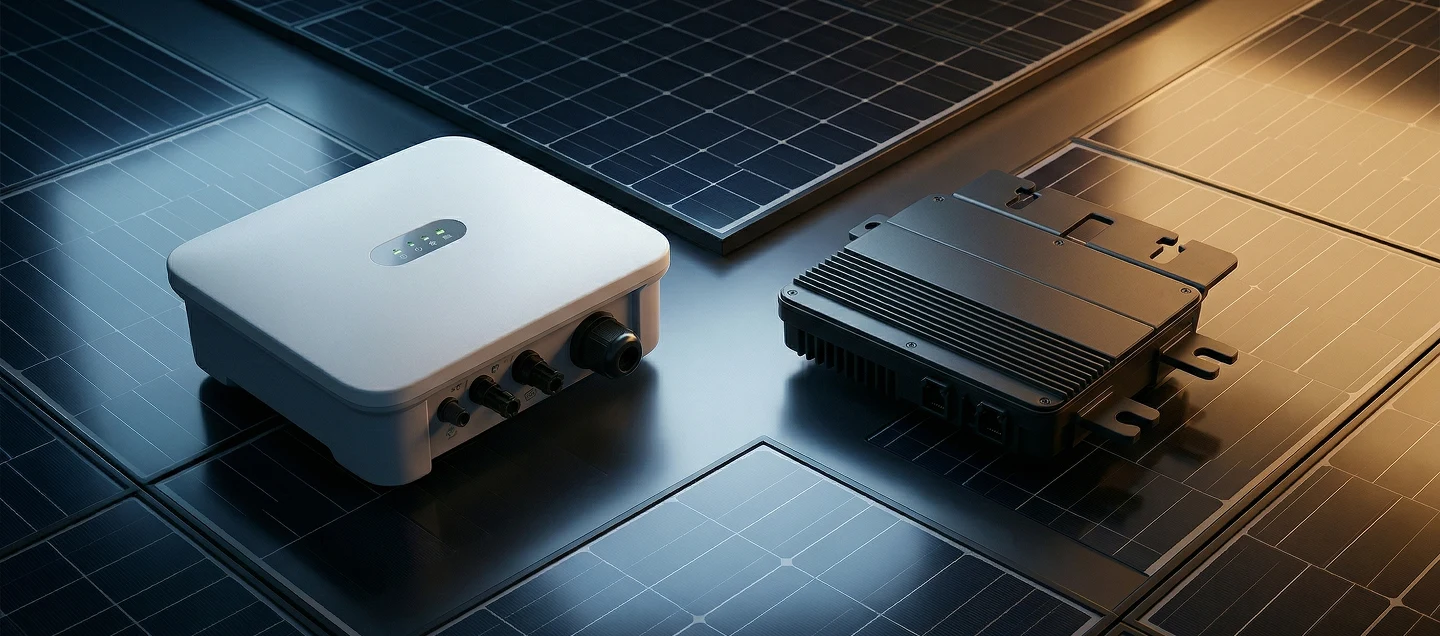

Chicago homeowners often raise the same thoughtful question in forums because many installer sites don’t spell it out clearly: “SolarEdge vs Enphase, which is actually right for my roof?”
Many pages highlight brand talking points, while Chicagoland homeowners benefit most from a practical view of the trade-offs that shape real performance and long-term ownership, especially since local roofs rarely match “perfect demo roof” conditions.

This guide offers a neutral, decision-grade comparison designed for solar panels in Chicago.
We’ll compare the underlying architecture (optimizers vs microinverters), pinpoint where shade drives performance separation, explain how monitoring protects savings by improving uptime, review real-world reliability considerations, and translate warranty fine print into total cost of ownership.
By the end of this article, you’ll know when we recommend SolarEdge, when we recommend Enphase, and the exact questions to ask any installer so your quote reflects real production, not “perfect sun” assumptions.
Key Highlights
- This isn’t a brand debate but a roof-fit decision. In Chicagoland, shade, roof planes, and layout constraints play a big role in real-world kWh, so two “same kW” quotes can deliver different results, and focusing on design is the best way to choose.
- SolarEdge vs Enphase comes down to where conversion happens. SolarEdge uses power optimizers on the roof with a centralized inverter on the wall (DC down), while Enphase uses microinverters on the roof (AC down).
- Code and inspection can be a helpful guide for the design. Since your local AHJ enforces NEC requirements like rapid shutdown (690.12), the best-fit system is often the one that’s simplest to permit and inspect with clean labeling and an inspection-ready layout, alongside strong performance on paper.
- Shade is where the system’s architecture shows its strengths most clearly. On roofs with partial shade, multiple planes, and mixed orientations, MPPT strategy, mismatch behavior, and DC:AC ratio (paired with platform monitoring) shape real-world kWh and the speed of long-run troubleshooting.
- Ownership experience matters as much as year-one production. Monitoring quality, service response time, and how failures affect output (central inverter event vs single micro event) can change your real savings more than small equipment price differences.
- Total cost of ownership includes incentives + utility rules + warranties. A trustworthy comparison brings together the Residential Clean Energy Credit, ComEd/utility interconnection, and net metering rules, and current manufacturer warranty terms (Enphase’s 25-year microinverter coverage vs SolarEdge’s current warranty versioning) to quantify payoff and risk.
- You’ll leave with a clear recommendation and a quote checklist. By the end, you’ll know when we recommend SolarEdge, when we recommend Enphase, and the exact questions to ask so your quote reflects real production, not “perfect sun” assumptions.
Why This Comparison Is Confusing (and Why Chicago Homeowners Feel It Most)
Chicago homeowners tend to get the most value from a SolarEdge vs Enphase comparison because local roofs and conditions are so varied. Many Chicago bungalows include dormers, additions, and multiple roof planes, creating mixed orientations and sun angles throughout the day.
That’s why “same kW” quotes still leave room for meaningful real-world variation: kW is the nameplate rating, and the kWh you capture is shaped by layout plus on-roof conditions like shade patterns, seasonal snow cover, mismatch behavior, wiring, and system uptime.
Shade effects are non-linear, and panel grouping and wiring can either concentrate or spread shade impact. With that in mind, roof geometry, shade patterns, stringing/layout, and inverter sizing are typically the strongest drivers of payback, while brand choice helps fine-tune the result.
The Core Difference in One Diagram
A quick way to frame the difference: SolarEdge optimizes each panel while using a centralized wall inverter for DC-to-AC conversion (DC down), and Enphase uses a microinverter on each panel to convert to AC on the roof (AC down).
With your local AHJ enforcing NEC rapid shutdown (690.12), the Enphase vs SolarEdge decision benefits from an inspection-ready lens alongside performance.
SolarEdge Architecture
SolarEdge’s architecture is designed to combine module-level optimization on the roof with centralized power conversion on the wall, giving you panel-by-panel control while keeping the inverter as the single DC→AC conversion point.
- What it is: A string inverter paired with power optimizers (DC-DC devices) on/near each module that perform module-level MPPT and voltage management, then send power down a DC string to the inverter for DC→AC conversion.
[Solar Panel] → [SolarEdge Power Optimizer] → (DC string) → [SolarEdge String Inverter (wall)] → AC → [Main Electrical Panel]
Roof vs wall callout (SolarEdge):
- On the roof: panels + power optimizers (module-level MPPT)
- On the wall: string inverter (does the DC→AC conversion for the system)
Enphase Architecture
Enphase’s architecture uses distributed conversion, allowing each panel to produce grid-ready AC and pairing it with a dedicated gateway for clear visibility and communications.
- What it is: A microinverter beneath each solar panel converts the panel’s DC into grid-compliant AC right at the module, creating a distributed conversion system.
[Solar Panel] → [Enphase Microinverter] → (AC trunk cable) → AC → [Main Electrical Panel]
Roof vs wall callout (Enphase):
- On the roof: panels + microinverters (each converts DC→AC)
- On/near the wall: IQ Gateway (monitoring/communications hub for performance data)
Shade & Roof Complexity
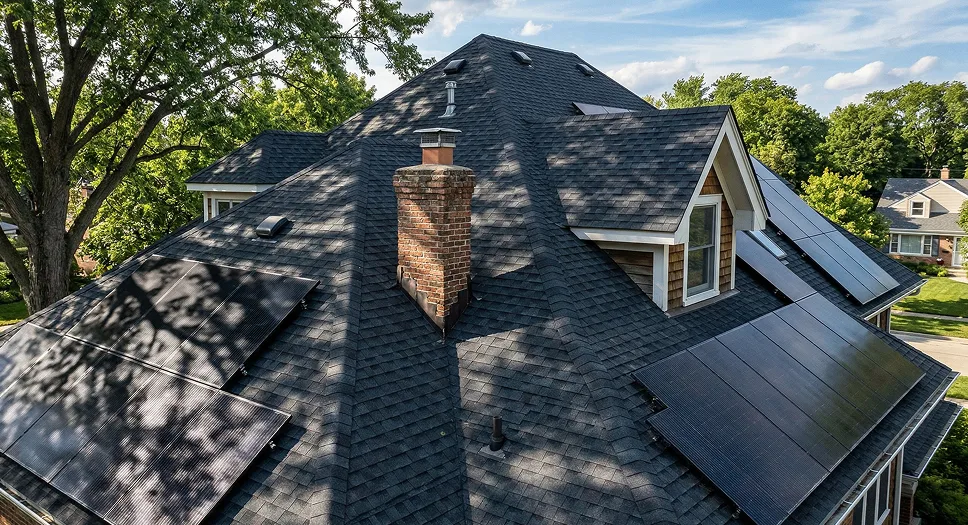
Most homeowners don’t feel the SolarEdge vs Enphase difference on a wide-open, single-plane roof in perfect sun; they feel it on the kinds of roofs Chicago actually has: multiple planes, nearby trees, dormers, chimneys, and “weird” shade that moves hour by hour.
This is where the gap between a quote that looks good on paper and a system that performs well in real life starts to open up.
On roofs with multiple planes, partial shade, and mixed azimuths, MPPT, mismatch losses, and clipping/DC:AC ratio interact with each platform’s monitoring stack (Enphase Enlighten vs SolarEdge Monitoring) to determine real kWh yield and long-run troubleshooting time.
Shade Tolerance & Mismatch Losses
Homeowners notice the SolarEdge vs Enphase differences most on real Chicago roofs, where smart design turns a strong quote into strong real-world performance.
On multi-plane roofs with partial shade and mixed azimuths, MPPT behavior, mismatch, and clipping/DC:AC ratio work together with each platform’s monitoring stack (Enphase Enlighten vs SolarEdge Monitoring) to shape delivered kWh and how efficiently performance can be understood and supported over time.
This is exactly the scenario where module-level control (SolarEdge optimizers or Enphase microinverters) can matter because you’re managing power at the module instead of letting the entire string behave like the weakest link under changing conditions.
What to Look For in a Quote
Two proposals can share the same system size in kW and still deliver different real-world kWh.
What usually separates a good quote from a marketing quote is whether the design and model reflect your roof’s constraints and real losses (not “perfect sun”).
PVWatts/SAM-style modeling accounts for real-world factors,such as shading, soiling, snow, mismatch, wiring, and availability/downtime as meaningful production-impact categories, so a strong quote makes those assumptions visible and easy to review.
In practice, the best quotes make the details easy to see: the array layout (which panels sit on which roof planes), the setback/access constraints that shaped the design, and a production estimate grounded in an actual shade assessment.
Chicago-Specific Shade Reality
Chicagoland homes often have a real shade profile simply because the region has a meaningful urban tree footprint.
The City’s urban forest plan cites 18.9% canopy cover (2010 estimate) and millions of trees, which translates into moving, seasonal shade that can change hour-by-hour on the same roof plane.
Alongside shade, roof access pathways and spacing requirements help define where panels can go, sometimes guiding arrays into creative groupings, which is exactly the kind of layout where mismatch can increase, and module-level control becomes especially valuable.
If your roof has meaningful shade or multiple planes, pick the option where the installer can show a design that matches your roof’s shade map, explains their stringing/layout approach, and uses production assumptions you can review and verify.
Ownership Experience: Monitoring, Reliability, Warranty
When people compare SolarEdge vs Enphase, the conversation usually starts (and ends) with specs, so it helps to ground the decision in a solar panel buying guide.
The difference you’ll actually feel as a homeowner shows up later: how quickly you find out something’s wrong, how clearly the system points to the cause, and how smoothly your installer can get you back to full production.
The sections below focus on the real-world stuff that protects your savings in Chicago, monitoring that makes troubleshooting obvious, reliability that minimizes downtime, and warranty details that determine who pays when service happens.
Monitoring & Troubleshooting
Monitoring is where “SolarEdge vs Enphase” becomes practical. If your system underperforms or goes down, your savings can pause, but with the right setup, you get fast alerts and clear visibility into what’s happening. That clarity helps your installer respond quickly and keep your system producing with minimal disruption.
- Per-panel vs system-level visibility: System-level monitoring answers “is the system producing?” while module-level visibility helps answer “which panel/device is the problem?”
- Service dispatch advantage: The faster a system pinpoints the fault, the fewer back-and-forth visits you typically need.
- Chicago reality: When roof access is tougher (winter conditions, storm cleanup, and tight scheduling), faster diagnosis becomes even more valuable, helping you minimize downtime and streamline the roof insurance claim process.
In the end, the “best” monitoring setup is the one that gets you from alert → diagnosis → fix with the least friction.
Prioritize clear visibility and fast fault isolation, so your installer can restore production quickly, even when Chicago weather makes access and scheduling harder.
Reliability & Failure Modes
Reliability comes down to smart design plus a smooth service process. When monitoring is clear, and support is responsive, small issues stay small, and your system gets back to full performance fast.
- SolarEdge failure shape: A central inverter issue can take down a larger share of production at once, but inverter service is typically off-roof (optimizer issues can still require roof work).
- Enphase failure shape: Microinverters distribute risk; one failure often affects one module’s production, but service work is more often on the roof.
- What shapes the homeowner experience most: Clear, consistent performance, efficient service visits, smooth scheduling even around weather, and a fast, well-managed warranty replacement process.
Reliability can be hard to compare because it’s not always visible to homeowners, and it often gets summarized too simply. The best approach is to ask your installer for concrete track records, like their last 24-month RMA counts and average time-to-repair, so you can choose the team most prepared to keep your system running smoothly.
Warranty Coverage
Warranties are where this comparison stops being theoretical. Two systems can look similar on paper, but the one that feels easiest to own is usually the one with clearer coverage, a clean start date, and a simple, well-supported replacement process.
A quick look at the current warranty for your exact equipment helps you confirm your full coverage, including the timeline and terms for each component.
You should also make sure you know when coverage officially begins because some warranties start when the system is activated or registered, and a quick check keeps your dates crystal clear.
Service is where warranties deliver value: manufacturer coverage often focuses on the equipment itself, while your installer’s workmanship and service policy can cover the practical parts, such as labor, travel, roof work, and reinstall, so the whole process stays smooth and predictable.
Overall, pick the system that fits your roof, then pick the installer who can prove they’ll keep it producing, with a clear monitoring setup, documented service process, stocked spares, and warranty handling that minimizes downtime.
Solar + Battery Compatibility
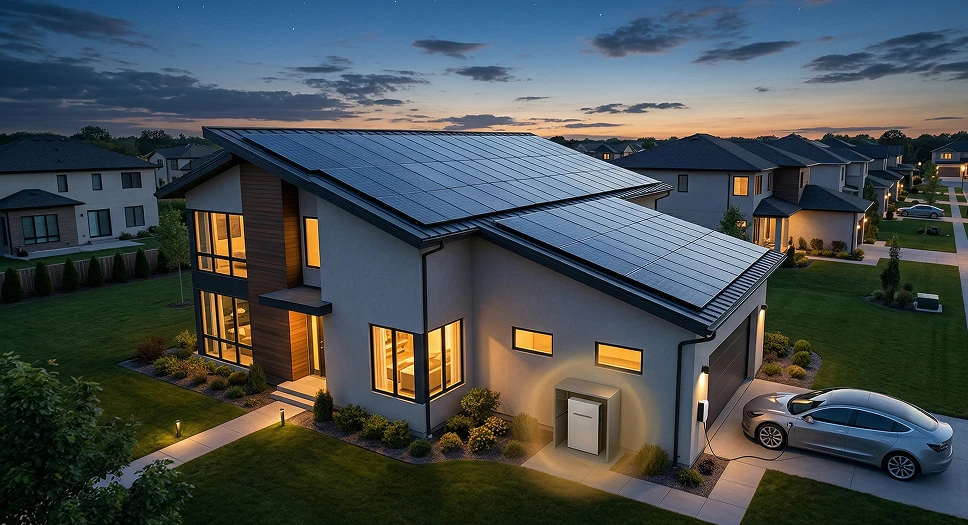
If you’re choosing between SolarEdge and Enphase for a PV-only system, you can keep it simple: match the right fit for your roof (layout and shading) and a service approach you’ll feel good about long term.
If storage is on your radar, even as a “maybe in a year or two," this is a great opportunity to choose an ecosystem and coupling strategy (AC-coupled vs DC-coupled) that makes future upgrades smooth, predictable, and low-disruption.
PV-Only vs Solar+Storage Design
If you’re PV-only today, SolarEdge vs Enphase is mostly a roof + shading + serviceability decision. When you add storage, it becomes an opportunity to pick the architecture that sets you up well: AC-coupled batteries connect on the AC side (often smoother to retrofit later), while DC-coupled batteries share a hybrid inverter path on the DC side (often fewer conversions and a more integrated “one system” approach).
AC-coupled (retrofit-friendly) batteries are typically easier to add later without touching a working PV inverter because the battery has its own inverter path.
Meanwhile, PV + battery systems that are DC-coupled can often share a single bidirectional inverter path, which can reduce conversion steps and simplify “one system” control, making it great when you’re designing solar+storage from day one.
It matters for future upgrades because if storage is on your near-term roadmap, your inverter choice becomes even more valuable because you’re picking an ecosystem and coupling strategy that can make future battery upgrades smoother, simpler, and more cost-predictable.
The Homeowner Reality Check
Homeowner discussions tend to fall into two helpful tracks: optimizing PV performance today or designing a system that’s storage-ready from the start. In a MoneySavingExpert thread, one poster summarized the sentiment bluntly: “I still recommend SolarEdge for PV only… but for a battery install, it’s hard to beat the best.”
Although it is merely an online review, the underlying point is useful: if storage is the priority, homeowners often shift from “which inverter is best?” to “which solar+storage system is best aligned with my goals (backup, self-consumption, future expandability, service experience).”
Chicago Economics Makes Storage More Relevant Now
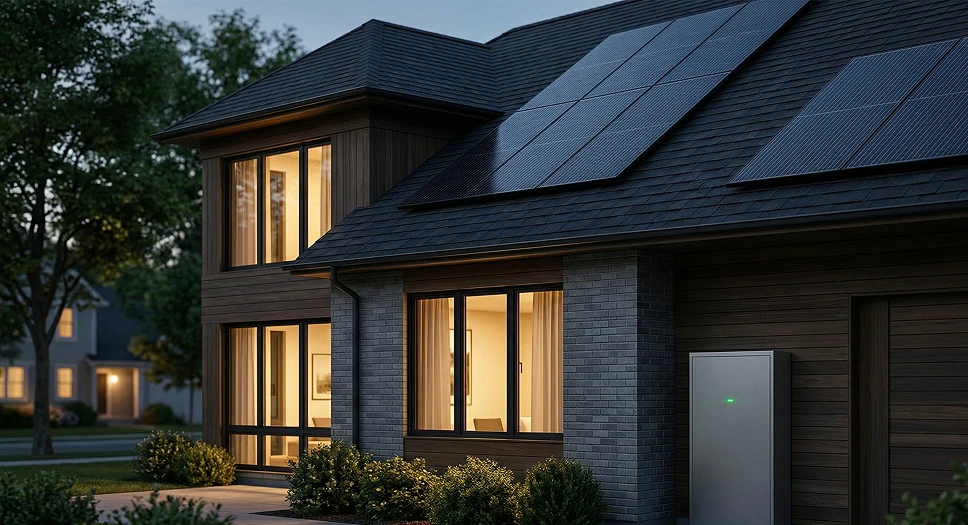
In Chicagoland, batteries can be an economic tool because export value is lower for new net metering customers after January 1, 2025. ComEd states that new net metering customers (Residential/Small Load classifications) are eligible for credits that offset charges in the Supply section of the bill.
That shift makes self-consumption more valuable than exporting because using kWh at home typically offsets more of your bill. Batteries can improve the math by moving midday overproduction into evening use, boosting self-consumption and supporting payback under supply-only export credits.
Based on ComEd Net Metering FAQ (2025), batteries can boost ROI by turning low-value exports into higher-value evening self-use. The right move is to model your bill impact with and without storage using a realistic self-consumption rate, then choose what improves real savings and not just kWh.
Recommendation Matrix
When you model the total cost of ownership, you can get a clear, confident picture by combining the Residential Clean Energy Credit, your utility’s interconnection/net metering terms, and the current manufacturer’s limited warranties (for example, Enphase’s 25-year IQ microinverter coverage and SolarEdge’s current warranty terms) to quantify both expected payoff and long-term protection.
In Chicago, cost and payback are driven less by the inverter brand and more by smart design and how your bill values each kWh. Two systems with the same kW on paper can deliver different real-world kWh, and in ComEd territory, the biggest gains often come from maximizing in-home use, especially under the post-2025 supply-only credit structure for exports.
The biggest levers are as follows:
- Production accuracy: A trustworthy quote reflects real shade, correct DC/AC sizing, and realistic losses (snow/soiling/mismatch), not “perfect sun” assumptions.
- Self-consumption strategy: The more solar you use on-site, the more value you typically capture, especially when exported kWh are credited differently than self-used kWh.
- Uptime/service: Minimizing downtime, reducing repeat truck rolls, and having clear labor coverage on warranty swaps can move lifetime value more than small equipment price differences.
If you want a payback number you can trust, focus on the inputs that drive real outcomes (production assumptions, self-consumption, and service terms), so you can compare proposals with clarity and confidence beyond the brand name.
The “best” system is the one that’s modeled honestly for your roof and supported by an installer who can keep it producing with minimal downtime.
We recommend SolarEdge when…
SolarEdge tends to be the better fit when your roof has real-world complexity, and you want module-level control without putting a microinverter under every panel.
It is also a good option when:
- Shade/mismatch is the dominant problem, like trees, chimneys, dormers, or shade that moves across the array during the day.
- Your roof offers a unique design, with multiple planes, mixed azimuths, and layout constraints that force panels into imperfect groupings.
- You value module-level MPPT + diagnostics and want granular visibility to spot underperformance quickly.
Overall, if your roof has meaningful shade or complex geometry, SolarEdge is often the cleaner fit because optimizers help manage mismatch without requiring a microinverter on every module.
We recommend Enphase when…
Enphase is often the better choice when you want a highly distributed design, and you care a lot about the “ownership feel” over 10–25 years.
- You want a distributed architecture, meaning there isn’t one central inverter doing all the conversion for the system.
- You prioritize long-term serviceability as “replace one unit at a time” instead of a single major component event affecting a big share of production.
- You want a strong homeowner monitoring experience with simple module-level visibility and straightforward troubleshooting.
If you want a system that fails in smaller pieces, is easier to diagnose at the module level, and feels simpler to live with over decades, Enphase is often the safer bet.
If you’re undecided: 5 tie-breaker questions
If you’re stuck between the two, these questions usually make the answer obvious based on your roof and your risk tolerance:
- How severe is your shade (none/light/heavy/seasonal)?
- How many roof planes and azimuths are you working with (single/two planes/complex)?
- Are you battery now, battery later, or never? (Storage plans can change the “best” choice and the design path.)
Once you answer these five questions, the best-fit choice usually becomes clear as a roof-and-service decision, rather than a brand debate.
Clear service and warranty answers are a great sign you’re working with a well-run installer, especially around service SLAs and warranty labor, so prioritize the proposal backed by the most transparent support plan, regardless of the logo.
What Questions to Ask Any Installer
Installer quality will move your outcome more than small hardware differences, so the goal is simple: make them show you the design, the assumptions, and the service plan in plain English. These questions quickly reveal whether you’re getting a real engineering quote or a marketing estimate.
- “Show the array layout and the shade assumptions.”
Request the roof-plane map and a clear walkthrough of the shade model (trees, chimneys, dormers), so you can see exactly how the layout and assumptions translate into real-world kWh, even for systems with the same kW on paper. - “What’s your service SLA and who pays labor on warranty swaps?”
Get clear specifics on response time and diagnostics, plus how labor and any roof work are handled (covered by the installer, reimbursed, or billed separately), so you have a crisp, accurate picture of what support looks like in practice. - “What’s your RMA rate (last 24 months) by component?”
Ask for counts (or ranges) for inverter, optimizer, microinverter, and gateway/comms issues, along with their average time-to-repair, which gives you one of the clearest, most practical snapshots of real-world reliability and service performance. - “If I add a battery later, what changes?”
Ask them to map the upgrade path: what gets added vs swapped, how storage-ready the design is, and what it means for self-consumption, backup capability, and payback.
If an installer can answer these questions clearly and back them up with a layout, assumptions, and a real service plan, you’re likely looking at a quote you can trust.
When the shade model, monitoring/alerts, and warranty labor are clearly documented, you’re looking at the kind of proposal that protects both uptime and long-term costs.
Prioritize the installer who can explain those details in plain English and put the service plan in writing because that’s what keeps a “great price” great after installation.
Frequently Asked Questions
SolarEdge power optimizer vs Enphase microinverter: what’s the real difference?
The real difference between SolarEdge power optimizers and Enphase microinverters is where DC-to-AC conversion happens: microinverters convert at each panel for highly resilient, module-by-module operation, whereas SolarEdge optimizes at each panel but converts at a central, wall-mounted inverter for a streamlined, often more cost-effective setup.
Still, both options deliver panel-level optimization and monitoring, so they typically perform much better than traditional string inverters on roofs with shade. They are excellent options, and the best fit comes down to your roof complexity, budget, and whether you want the simplest path to adding a battery later.
Which is better in the shade in Chicago, SolarEdge vs Enphase?
On partially shaded Chicago roofs, both SolarEdge and Enphase are strong options because both use module-level electronics that help reduce mismatch losses compared to basic string-inverter setups.
Enphase microinverters convert DC to AC at each panel, so shade on one module tends to have less impact on the rest of the array, while SolarEdge power optimizers manage module-level MPPT/voltage behavior and are designed to mitigate mismatch-related losses on complex roofs.
What’s the best solar inverter Chicago homeowners should choose?
The best solar inverter for Chicago homeowners depends on your roof, shade profile, and whether you plan to add storage.
Choose Enphase if you want a fully distributed design (DC→AC at each panel) and a straightforward module-by-module service model, plus Enphase offers warranty documents by activation window that commonly include long microinverter coverage.
Choose SolarEdge if you want optimizer-level control with a centralized wall inverter; SolarEdge states its optimizers handle module-level MPPT to minimize mismatch losses and support troubleshooting.
Can I add a battery later?
Yes, you can add a battery later, and the “right” setup makes that upgrade smooth and predictable. With AC-coupled storage (common with Enphase), adding a battery later is usually straightforward; you install the battery and its inverter on the AC side while keeping your existing PV equipment largely unchanged.
With DC-coupled storage (common with SolarEdge hybrid), adding a battery can be highly efficient because it shares the same inverter pathway, often creating a clean, integrated solar+storage setup when the system is designed with the right hybrid inverter compatibility from the start.
The best next step is to have your installer map the upgrade path in writing, including what gets added vs swapped, expected cost, and how it improves self-consumption and backup.
Does rapid shutdown affect the choice between SolarEdge and Enphase?
No, rapid shutdown usually doesn’t affect the choice between SolarEdge and Enphase because both are designed to meet NEC rapid-shutdown requirements and deliver strong safety.
The difference is simply the approach: Enphase converts DC to AC at each panel (minimizing high-voltage DC on the roof), while SolarEdge uses optimizers to rapidly reduce DC to safe levels. In most cases, that means you can choose based on what best fits your roof, monitoring preferences, budget, and battery plans, with rapid shutdown covered either way.